NutriEase — Rethinking How People Eat with AI
Most people know roughly what healthy eating looks like. The problem is not knowledge, it is friction. What do I actually have at home? Does it fit my goals today? What does a week of meals look like if I am trying to hit 2,400 calories on a budget? These are not hard questions, but answering them every day is exhausting. People stop trying.
NutriEase is my attempt to make that friction disappear.
What it does
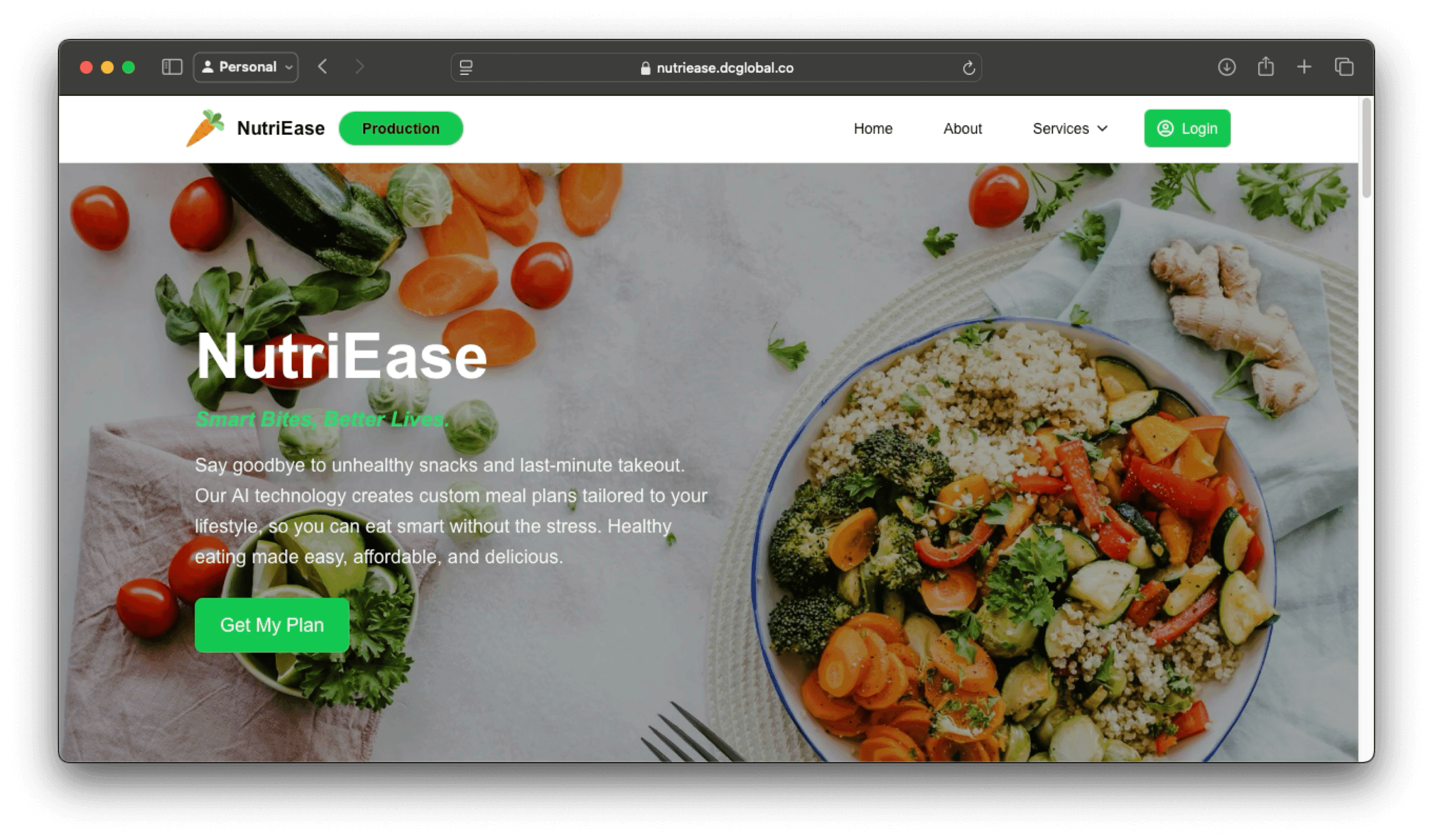
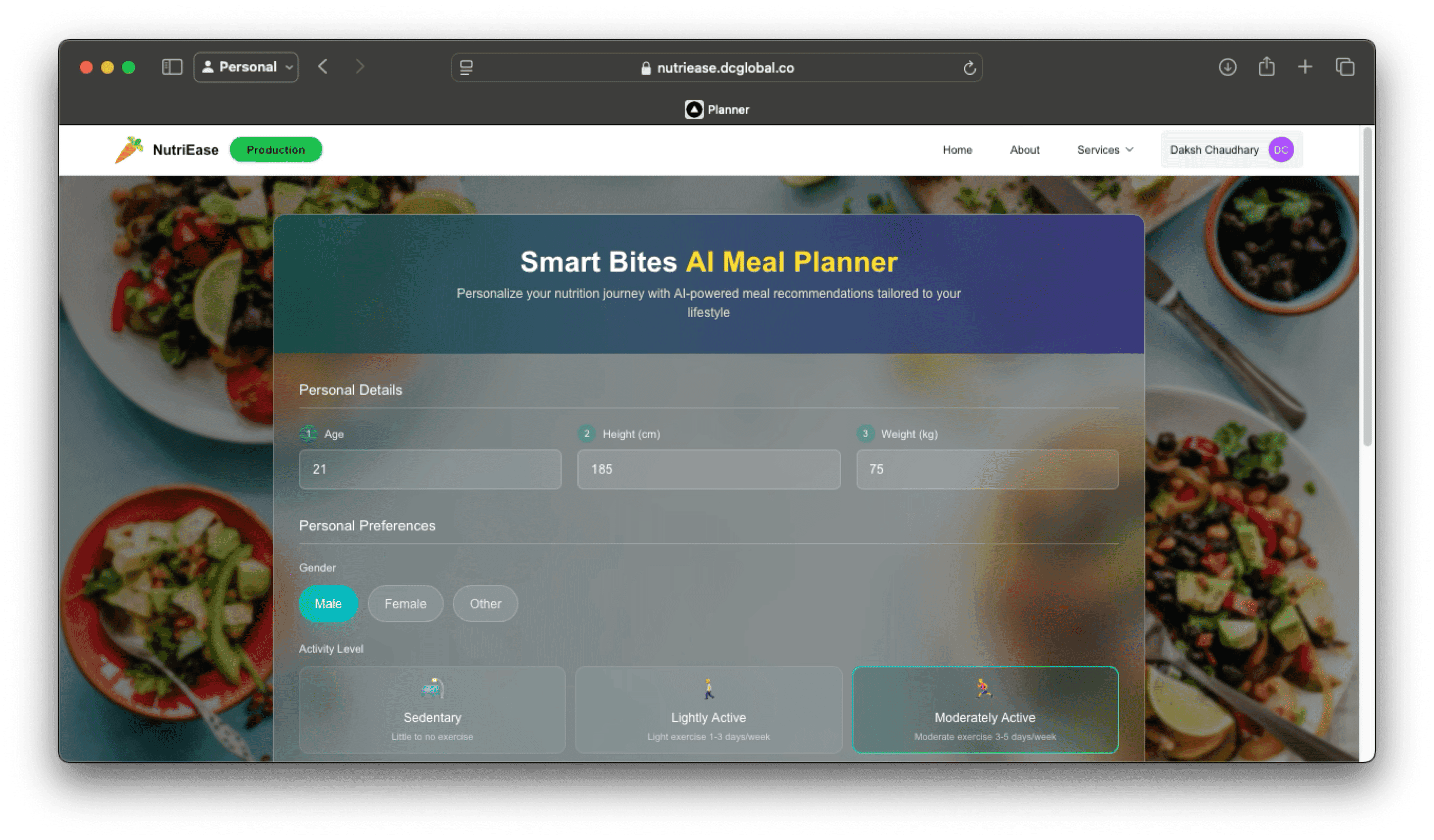
At its core, NutriEase generates personalised 7-day meal plans. You tell it your dietary goals, restrictions, and budget. You add what is currently in your pantry and fridge. The platform connects to GPT-4, which uses all of that context to produce a structured weekly plan with full nutritional breakdowns and cost-per-serving estimates for each meal.
The nutritional numbers do not come from the model. They come from a structured nutritional database, cross-referenced with regional cost datasets. This matters: LLMs hallucinate figures confidently, and someone tracking calories or macros for a health goal needs those numbers to be correct, not plausible.
A virtual cooking assistant, powered by Gemini, handles real-time queries during cooking: substitute suggestions, step-by-step walkthroughs, technique explanations. It is the difference between a static recipe and something that actually adapts when you do not have an ingredient or do not know what "fold the batter" means.
The part I am most proud of
The ingredient-aware suggestion engine. Before generating any meal plan, the backend reads the user's pantry, weights the prompt to prioritise meals that use what is already on hand, and constrains the output to minimise both grocery spend and food waste. Early versions acknowledged the pantry but still suggested meals requiring a full shopping trip. Getting the model to genuinely treat available ingredients as constraints, not suggestions, required careful prompt architecture.
The result is plans that feel like they were written by someone who looked in your fridge first. That shift in perception is significant: it is the difference between a generic diet app and something that feels like it actually knows you.
The stack
The frontend is Next.js with TypeScript, server-side rendered for fast initial loads. The backend is Django with Django REST Framework, PostgreSQL for structured data, and Celery with Redis for async AI calls since meal plan generation takes 8 to 12 seconds and cannot block a synchronous request. Docker containerises the whole system for consistent environments across development and deployment.
What it could become
NutriEase is solving a problem that scales. The same core architecture of user profile, available resources, AI-generated personalised output, and a structured validation layer applies well beyond meal planning.
A few directions I find genuinely exciting:
Chronic condition management. The gap between a diabetes or kidney disease diagnosis and actionable, personalised nutrition guidance is enormous. A system that connects clinical dietary restrictions to daily meal planning, filtered against what is realistically available and affordable for that person, could have real health outcomes, not just convenience outcomes.
Retail and grocery integration. If the ingredient engine knows what is in your fridge and what your local store has on sale this week, the meal plan becomes a shopping optimiser. That is a meaningful value proposition for both users and grocery partners.
Behavioural feedback loops. Right now the system generates and the user executes. The interesting version is one where user ratings, ingredient substitutions, and actual cooking patterns feed back into future plans. The model becomes genuinely personalised over time rather than re-running the same prompt with updated preferences.
Food security contexts. The UN estimates over 700 million people face food insecurity. A system that maximises nutrition from a constrained ingredient set, budgeted at a realistic weekly spend, is not just a product feature. It is a meaningful application of AI to a problem that matters.
What building it taught me
The architecture split I arrived at, where the model handles language and preference, the database handles facts, and the product stitches them together, shows up in everything I build with AI now. Language models are powerful precisely when you stop asking them to do things structured systems do better.
I also learned that the feedback loop is the product. An AI system that cannot learn from its own production is a very expensive static rule set. The next version of NutriEase starts with the feedback pipeline, not the generation pipeline. That is the part that compounds.
Share Article